
Cyberpunk and dystopian fiction don’t always overlap, but they often share the same relationship with nature : there isn’t much of it left. And what’s left tends to end up in the same places.
State of nature in fictions
In Blade Runner (1982), when Rick Deckard visits Tyrell’s office, the owl on the desk is artificial. In Philip K. Dick’s novel, owls were the first to go extinct after the fallout. So Tyrell has a replica. The sun, the bonsai, the fake owl, all of it sitting at the top of a pyramid while the streets below are wet and dark and permanent, as we see a bit earlier when Deckard eats at the noodle bar.

Altered Carbon (2018) does the same thing with less subtlety and more drama. The Meths live literally above the clouds. Takeshi Kovacs visits Laurens Bancroft’s place, Suntouch House, and what greets him isn’t just a building. There’s a garden on the property, visible from the approach, manicured and impossible-looking against the grey sky below. And inside, the prized possession is a Songspire Tree, alien, one of a kind, worth a fortune. It doesn’t even look like a plant. But that’s sort of the point : at a certain level of wealth, nature becomes a collector’s item.
In Cyberpunk 2077 (2020), the game is actually more generous with green space than the other two. Which sounds like a compliment until you notice where the parks are. Reconciliation Park, northern Heywood, the wealthy end. Memorial Park, Corporate Plaza, facing the Arasaka Tower. Not in Pacifica. Not in the parts of the city where people are just trying to get through the day.
These videos on each Night City district let you easily see the differences.
When concrete was future
The dystopian stuff, Huxley, Orwell, that’s 1940s and 50s. Post-war, rapid urbanization, the Western world building itself back up at speed and not being particularly precious about what got cleared in the process. Green space went. Highways went through landscapes that had been there for centuries. Car parks where parks used to be. The logic was simple, growth is the future, nature is in the way.
By the 80s when cyberpunk properly emerged, that logic had fully matured. Tokyo, New York, consumption and capital and acceleration. Gibson was just following the line forward. If this is where we are now, here’s where we end up.
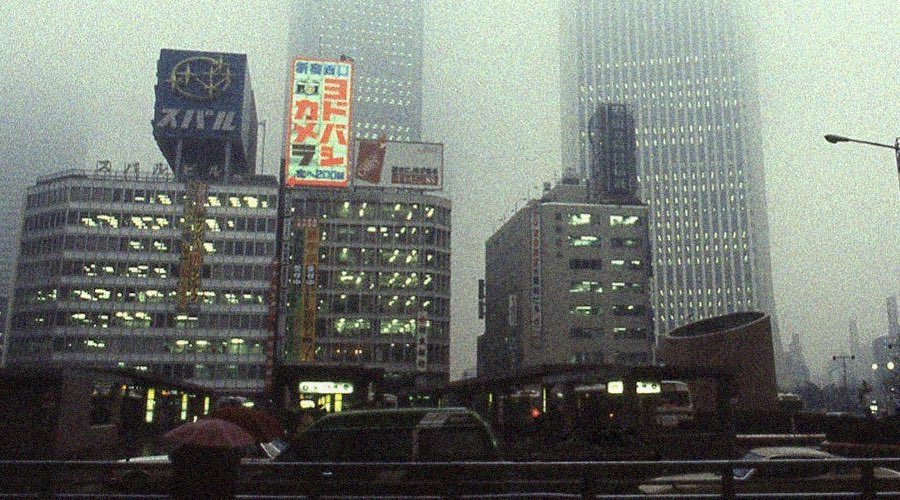
Except in the 70s and 80s something else was also starting. Scientists raising alarms. Biodiversity, climate, the basic livability of cities over time. Wealthier countries started responding, greening programs, parks, clean air. Slowly. Selectively.
Lush is the new luxury
And here’s where it gets interesting.
Green urbanism is expensive. And when a neighborhood gets trees and parks and better air, the rent goes up. In London, properties within 100 meters of a park cost on average 15% more than comparable homes further away, a gap that’s grown by 6.3% in the last decade. You green a neighborhood, you price people out of it. There’s a name for it now, green gentrification.
So take that logic and drop it into a world with scarce resources and extreme inequality and it follows pretty naturally. Clean air becomes rare. Green space becomes rare. Sunlight, if you can believe it, becomes rare. And rare things become luxury things. That’s just how it works.
The bonsai on Tyrell’s desk. The park outside the corporate tower. The garden above the clouds that shouldn’t exist.
Never decoration. Always a signal.
Nature wasn’t lost equally. It was taken.