
I’ve seen too many “top cyberpunk cities” lists that put Tokyo at number one because of the neon and vending machines. Don’t get me wrong, Tokyo is worth it, I’ve been. But it’s too clean, too organized. Real cyberpunk isn’t just about the aesthetic. It’s about the cracks in the system, the visible inequalities, the chaotic development that nobody planned but everyone has to live with.
This isn’t a travel guide. It’s more like… a showcase. These five cyberpunk cities in the real world show that the dystopian future has, in some ways, already arrived, the kind of places where you look around and think “yeah, this is what they were warning us about in the 80s.”
In any manner, I do not encourage “poverty tourism”, but in my opinion there’s a difference between gawking and observing. These cities exist. The contrasts exist. Pretending they don’t helps nobody. If you go there, just don’t be an asshole with your camera.
1 – Las Vegas, USA
Yeah, I’m starting with Vegas. Hear me out.
The Strip is basically Disneyland for adults. Fake Eiffel Tower, fake Venice canals, fake New York skyline. Every inch designed to extract money from your wallet as efficiently as possible. Casinos, shows, clubs, hotels that cost $500 a night. It’s a pleasure machine built in the desert.
But that’s the surface layer. The literal surface. Underneath the casinos, in the storm drain tunnels that run for hundreds of miles under the city, over 30,000 people live in the dark.
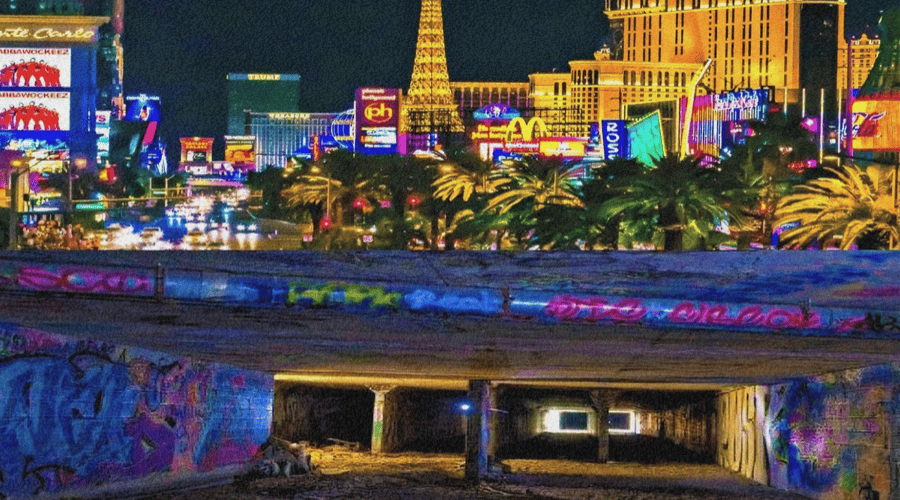
I served drinks to a photographer once who’d documented the tunnels. She showed me pictures on her phone between rounds. Mattresses in concrete tubes. Flood warnings spray-painted on walls. People with actual addresses like “tunnel near Caesars, third junction left.”
The contrast is what makes it cyberpunk. Ground level is where money gets spent on architectural fever dreams – volcanoes, pirate ships, miniature cities. Below ground is where the system’s leftovers go.
What to see: The storm drains are technically off-limits, but the Strip itself at 3am tells you everything you need to know. Watch people stumble out of casinos while maintenance crews hose down the sidewalks.
2 – São Paulo, Brazil
São Paulo doesn’t do subtlety.
It’s Brazil’s economic engine. Financial capital, business hub, where actual work happens. Not the beach paradise of Rio – São Paulo’s reputation is concrete, traffic, and grind. 12 million people in the city proper, 22 million in the metro area, all stacked in towers because there’s nowhere else to go.
The brutalist architecture is everywhere. Massive concrete blocks that look like they were designed by someone who really hated windows. High-rise after high-rise, glass and steel mixing with raw cement. Rich neighborhoods with helipads on the roofs, favelas spreading at the edges and sometimes right next to luxury condos. The inequality isn’t hidden, it’s part of the landscape.
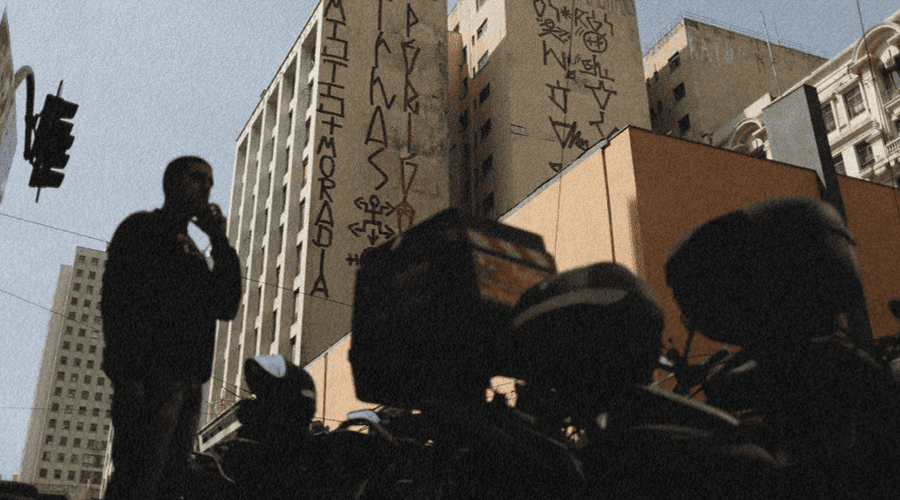
Then there’s the pichação, that angular, aggressive style of tagging that covers building facades. Crews scale 30-story buildings without ropes just to leave their mark. It adds this layer of rebellion to all that corporate concrete.
My roommate’s from São Paulo. She says the city has a rhythm – you either sync with it or it breaks you. Everything’s functional, everything’s intense, everyone’s hustling.
What to see: Centro at rush hour. The mix of crumbling heritage buildings, modern financial towers, elevated highways, and the sheer density of it all. The city doesn’t hide what it is.
3 – Cairo, Egypt
Cairo’s got 20 million people and apparently zero city planners.
The development is completely uncontrolled. Buildings stack on buildings, roads twist into knots, and in certain seasons, sandstorms turn the sky this apocalyptic orange that looks like someone cranked the saturation too high on a photo filter. Except it’s real.
Then there’s Manshiyat Naser. The locals call it Garbage City. It’s not a nickname, it literally processes most of Cairo’s waste. About 15,000 tons daily. The whole neighborhood is a recycling operation run by Coptic Christian families who’ve been doing this for generations. Buildings covered in sorted plastic bags, streets lined with recyclables, and somehow it works.
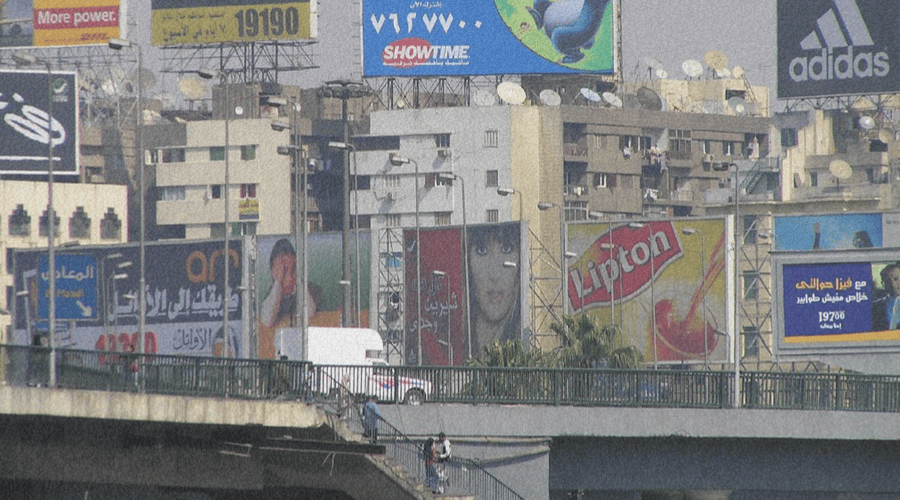
The roads are where the visual overload hits hardest. Massive billboards everywhere, stacked on top of each other, some three or four stories tall. Not every building has them, but the highways and main arteries are just walls of advertising competing for eyeballs. Add the dust, the traffic chaos, the brutal highway interchanges, and you’ve got this grinding urban machine that never stops.
The contrast with Cairo’s ancient heritage is surreal. You’ve got the Pyramids on one side, pristine and eternal. Then you turn around and see this massive, chaotic sprawl of unplanned construction and satellite dishes everywhere.
What to see: Manshiyat Naser if you can handle it. The orange-sky sandstorms happen mostly in spring. The highway interchanges at night are pure concrete dystopia lit by sodium lights.
4 – Mumbai, India
Mumbai doesn’t hide its contrasts. It can’t.
You’ve got Dharavi – one of the largest slums in Asia, about 1 million people packed into 2.4 square kilometers. Then, literally across the street, glass-and-steel towers where apartments cost millions. The metro line runs right through both. Elevated tracks that give you a perfect aerial view of the divide.
I met someone at the bar who’d lived there for work. He said the road loops and overpasses were like something from a fever dream. Multi-level intersections that twist over and under each other because the city ran out of ground space decades ago.
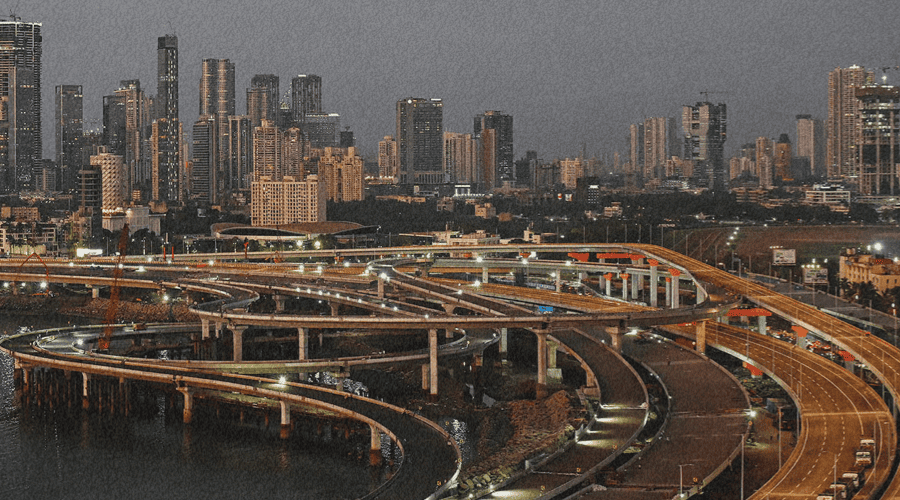
The thing about Mumbai is it’s honest. The system isn’t pretending to work for everyone. It’s right there in the architecture – who has space, who doesn’t, who gets the view.
What to see: Take the metro. The aerial sections give you the full picture. The highway interchanges near Bandra-Worli Sea Link are peak urban chaos.
5 – Chongqing, China
Chongqing is what happens when you build a city of 32 million people in the mountains.
It’s not flat. It can’t be. So everything goes vertical. Not just buildings – roads, metro lines, entire neighborhoods stacked on different levels. The city has layers. You can be on what feels like ground level, then realize you’re actually on the sixth story of something else. Staircases everywhere. Pedestrian bridges connecting towers. The whole place is a 3D puzzle that somehow functions.
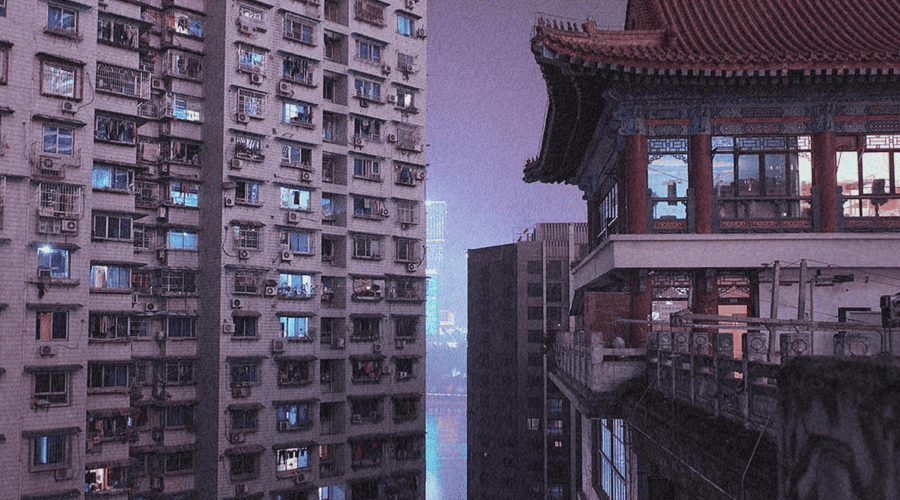
At night, the Yangtze River cuts through the middle, and both banks light up with that classic cyberpunk glow – neon, LED billboards, illuminated bridges. Add some fog or industrial haze and you’ve got the full Blade Runner effect without the Hollywood budget.
A friend who taught English there for a year said navigating Chongqing broke his brain for the first month. “I’d take an elevator down and end up higher than where I started.”
The density is insane. High-rises packed so tight you can see into your neighbor’s apartment from five buildings away. Markets tucked into the lower levels of residential towers. The infrastructure is chaos but it works – somehow the buses, metro, river ferries, and pedestrian traffic all flow without completely breaking down.
What to see: Hongya Cave at night for the full neon stack effect. The Yangtze River crossings at dusk when the lights start coming on. Eling Park gives you an overview of the vertical madness. Walk the riverside neighborhoods where buildings cling to the slopes at impossible angles.