5 Cyber Attacks That Deserve Their Own TV Show

I don’t endorse big cyber attacks. Let’s get that out of the way. But I’ve been around enough people who know things to recognize when something is genuinely cinematic. Not glorified. Just… objectively wild.
These are five of the craziest famous cyber attacks that ever happened. They’re the kind of ops that make you stare at nothing for a second and think about the road not taken. Enough material here for five good seasons. Mr. Robot good, not Money Heist good.
1 – Stuxnet (2010)
Stuxnet wasn’t some script kiddie playing around. It was a military-grade piece of malware, almost certainly built by the US and Israel, designed to physically destroy Iranian nuclear centrifuges. Not steal data. Not encrypt files. Break actual machines.
It targeted Siemens industrial control systems so precisely that it laid dormant on anything that wasn’t the exact setup used at the Natanz enrichment facility. It stayed undetected for months, quietly telling centrifuges to spin at wrong speeds while feeding false “all good” readings to operators. The engineers thought their equipment was just failing.
Consequences
Around 1,000 centrifuges destroyed. Iran’s nuclear program set back by roughly two years. When Stuxnet leaked beyond its target and got analyzed, it redefined what nation-state hacking could look like. Every major government started taking offensive cyber seriously after this. The code became a blueprint, studied and partially repurposed. The genie doesn’t go back in the bottle.
2 – Carbanak / The Great Bank Heist (2013-2015)
Ocean’s Eleven but the screenwriter actually knows how banks work. An Eastern European cybercriminal group spent two years infiltrating over 100 banks across 30+ countries. No brute-forcing. Phishing emails to employees, one compromised workstation, then months of just watching. Learning internal workflows. Recording screens. Waiting.
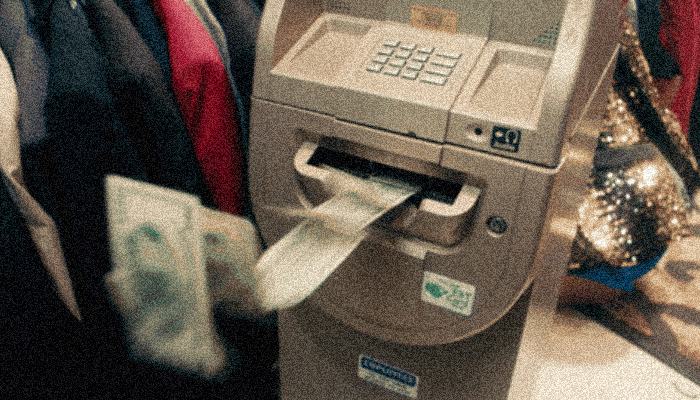
Once they knew the system well enough to impersonate it, they manipulated balances, programmed ATMs to dispense cash at specific times, then had people waiting on the street to collect. No ski masks required.
Consequences
Estimated losses between $500 million and $1 billion. The ringleader was arrested in Spain in 2018, but a significant chunk of the money was never recovered. The banks mostly stayed quiet about it. Which is honestly the most believable part.
3 – Bangladesh Bank Heist (2016)
They almost walked away with $1 billion. What stopped them wasn’t security or detective work. It was a typo.
North Korea’s Lazarus Group accessed Bangladesh Central Bank’s SWIFT credentials and submitted 35 fraudulent transfer requests totaling $951 million. Five went through. $81 million, gone. The rest were flagged because one transfer spelled “Foundation” as “Fandation.” A Deutsche Bank correspondent caught it.
The $81 million reached the Philippines, got laundered through casinos that were conveniently exempt from AML rules at the time, and mostly vanished.
Consequences
Bangladesh Bank’s governor resigned. The Philippines tightened its AML laws. SWIFT overhauled its security protocols. About $15 million was eventually recovered. The rest is somewhere, probably.
4 – Colonial Pipeline Ransomware Attack (2021)
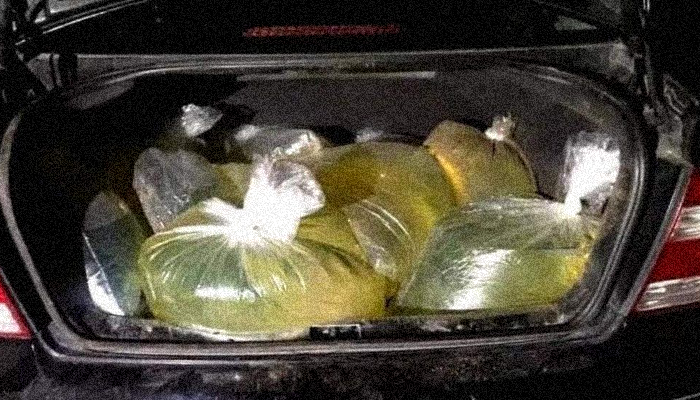
A friend texted me during this one asking if I’d seen the news about people filling plastic bags with gasoline. I had not. I looked it up. The Consumer Product Safety Commission had to publicly ask Americans to stop doing that.
A ransomware group called DarkSide got into Colonial Pipeline’s network through a single compromised VPN password with no MFA on it. Colonial supplies about 45% of the fuel on the US East Coast. They shut down operations proactively and paid $4.4 million in Bitcoin within hours.
Consequences
Fuel shortages across the southeast US, gas stations running dry, Biden declaring a state of emergency. The FBI recovered about $2.3 million of the ransom by tracing the wallet. DarkSide disbanded shortly after. The attack became the go-to case study for critical infrastructure security, mostly because the entry point was embarrassingly simple.
5 – Bybit Hack (2025)
Still fresh. In February 2025, Bybit lost approximately $1.5 billion in Ethereum. Single transaction. Biggest crypto theft in history, by a wide margin.
Lazarus Group again, and they didn’t even touch Bybit’s systems directly. They compromised the interface of Safe{Wallet}, a third-party multi-sig tool Bybit used. When Bybit’s signers approved what looked like a routine transaction, they were actually signing something manipulated at the UI level. The underlying smart contract had been swapped. Funds gone.
My friend Sofia used to brag about having hacked our middle school’s wifi to get around the content filter. I think about that sometimes when I read about stuff like this. Same instinct, slightly different scale.
Consequences
$1.5 billion moved through mixers and split across hundreds of wallets. Bybit covered the losses and stayed operational. Most of the funds are still unaccounted for. Lazarus Group’s total crypto theft figures now sit somewhere above $3 billion across all operations. The hack reopened debates about how multi-sig security actually works in practice vs. on paper.
Conclusion
Five famous cyber attacks, five completely different playbooks. The only thing they share is someone finding the gap between how a system is supposed to work and how it actually does.
Not saying it’s cool. Just saying it’s hard not to find it interesting.